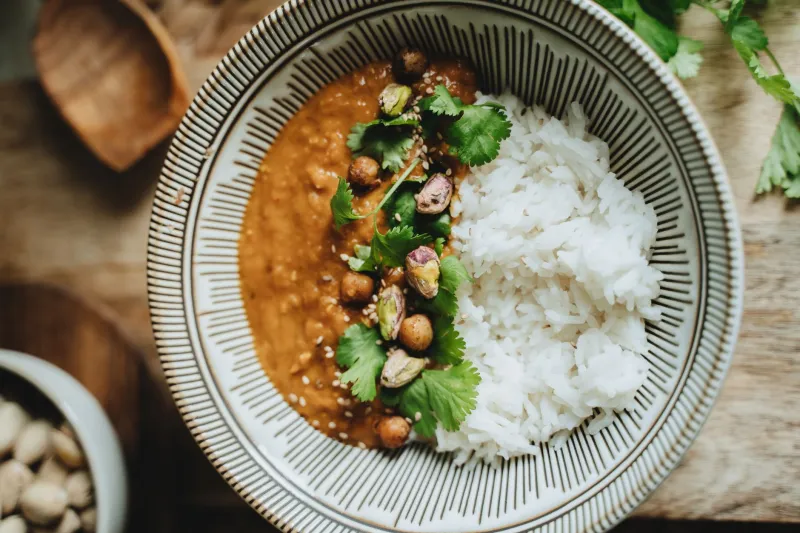
Why Your Brain Actually Tastes Indian Food Differently When It Arrives Piping Hot
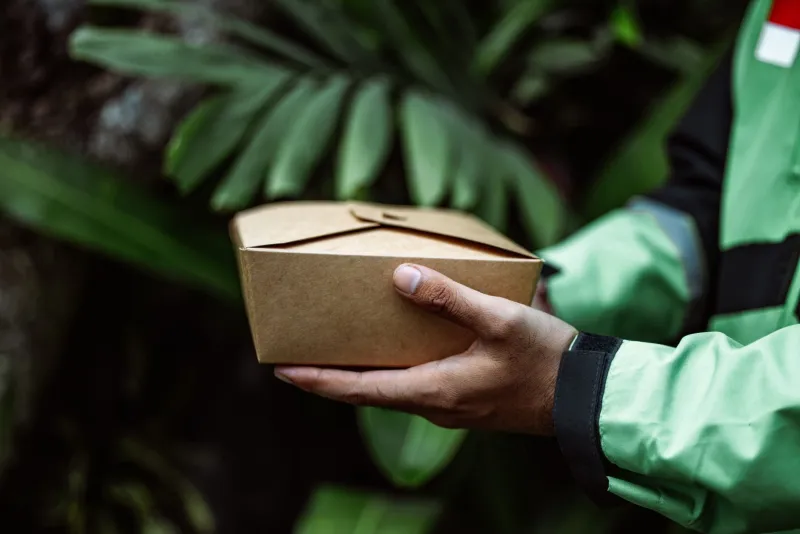
You've probably noticed it without really thinking about it. The dal that arrives at your door still steaming just tastes better than the container you let sit on the counter for twenty minutes while you hunted for your phone charger. It's not in your head — well, actually, it kind of is. And that's exactly the point.
The relationship between temperature and flavor perception is one of the more underappreciated corners of food science, and Indian cuisine sits right at the center of it in ways that most people never stop to consider. Fast delivery isn't just a convenience flex. For Indian food specifically, it's the difference between a meal that genuinely sings and one that just... exists on your plate.
What Heat Actually Does to Your Taste Receptors
Here's the short version: your tongue and palate are packed with protein receptors that detect flavor compounds — but many of those receptors are also temperature-sensitive. When food is hot, volatile aromatic molecules release more readily and float up into your nasal passages, where a huge chunk of what we call "taste" actually happens. Smell and flavor are deeply intertwined, and heat is basically the on switch.
For Indian food, this matters enormously. A bowl of chicken tikka masala or a fragrant lamb rogan josh is built on layered aromatics — cardamom, cumin, coriander, fenugreek, fresh ginger. These aren't just background notes. They're the whole performance. When the dish is hot, those compounds are actively volatilizing, meaning they're literally wafting up and engaging your olfactory system before you even lift the fork. When it cools down, that aromatic performance dims. You're still eating the same food, technically. But your brain is receiving a noticeably quieter version of it.
The Capsaicin Factor Is More Complicated Than You Think
Spice lovers, this one's for you. Capsaicin — the compound responsible for heat in chiles — doesn't just burn. It binds to a receptor called TRPV1, which your nervous system uses to detect actual heat, like touching something hot. When capsaicin activates TRPV1, your brain interprets the sensation as warmth and mild pain, and it responds by releasing endorphins. That's the rush.
But here's where temperature gets interesting: the TRPV1 receptor is more easily triggered when the food itself is already warm. A dish served hot lowers the activation threshold for capsaicin, which means you feel the spice more vividly, more immediately, and with more of that characteristic bloom of warmth that spreads through your chest. A lukewarm curry with the same chile content will feel noticeably flatter — less alive, less dynamic.
This is part of why Indian food that arrives quickly from a kitchen that's actively cooking (rather than food sitting in a warming drawer) delivers such a distinct sensory experience. The spice isn't just hotter — it's more itself.
Anticipation Is an Ingredient Too
Neuroscience has a lot to say about how expectation shapes perception, and food is no exception. When you order Indian delivery, your brain starts working before the food even arrives. The smell of spices when you open the bag, the visual of a sauce that's still glossy and moving, the steam rising from a container — these cues prime your brain to expect richness and depth. And expectation, it turns out, actively influences how intensely you perceive flavor.
Studies on flavor psychology have shown that people rate food as tastier when they believe it was freshly prepared, even in blind taste tests. The "fresh from the kitchen" signal your brain picks up when delivery arrives quickly and hot isn't just placebo. It sets up a neurological context that makes the actual eating experience more rewarding. You're more present, more engaged, more primed to enjoy it.
For Indian food specifically, that freshness cue carries extra weight. Unlike a pizza that arrives at room temperature and still tastes pretty solid, or a sandwich that doesn't really care what temperature it's at, Indian dishes are architecturally dependent on heat. The emulsification of a butter chicken sauce, the texture of a freshly made roti, the way basmati rice holds its individual grains — all of these are at their best in a narrow window after cooking. A fast, hot delivery isn't just nice to have. It's kind of the whole thing.
Why Indian Food Is Uniquely Vulnerable to Temperature Drop
Not every cuisine suffers equally when it cools. A caprese salad is arguably better at room temperature. Cold noodles are their own genre. But Indian food is built around the interplay of fat, spice, and heat in ways that make temperature a load-bearing element of the dish.
Take ghee, the clarified butter used throughout Indian cooking. At serving temperature, it's liquid, fragrant, and coats ingredients in a way that carries fat-soluble flavor compounds to your palate efficiently. As it cools, it begins to solidify and that delivery mechanism slows down. The flavor is still there, but it's less bioavailable, in a sense — harder for your taste receptors to access. Same goes for coconut-based gravies, cream sauces, and the spiced oils that form the base of so many dishes. They're designed to be experienced warm.
Then there's the textural dimension. Naan that arrives hot has a slight chew, a faint crispness at the edges, a give in the center. Ten minutes later, it's chewy in a different, less pleasant way. Samosas lose their crunch. Rice starts to clump. The meal is still edible, obviously — but the version your brain gets to experience is a reduced copy of what left the kitchen.
The Case for Prioritizing Speed (Without Sacrificing Quality)
None of this means you should panic-eat your delivery the second it arrives. But it does mean that when you're choosing where to order from, turnaround time isn't just about convenience — it's genuinely connected to how good the food will taste.
There's a reason serious Indian food lovers talk about eating fresh. It's not snobbery. It's that the cuisine rewards immediacy in ways that are grounded in real chemistry and real neuroscience. The spices are more vivid, the aromatics are more present, the textures are what they were designed to be, and your brain — primed by heat and freshness cues — is fully on board for the experience.
So next time your order shows up and the container is warm in your hands and steam curls up when you pull back the lid, take a second to appreciate what's actually happening. Your taste receptors are firing at full capacity. Your capsaicin receptors are primed and ready. Your brain is already halfway to enjoying the meal before you've taken a single bite.
That's not an accident. That's just Indian food doing exactly what it was built to do — and arriving fast enough to let it.