You Don't Actually Know Your Spice Tolerance — Here's How to Find Out for Real

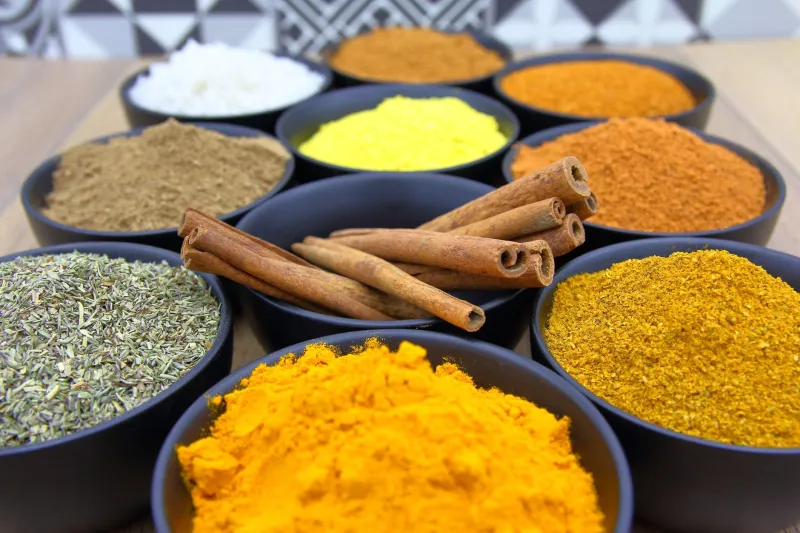
Photo: Shirlysureshkumar, CC BY-SA 4.0, via Wikimedia Commons
Let's be honest with each other for a second. You've ordered "medium" at an Indian restaurant, confidently, and then spent the next ten minutes quietly sweating through your shirt while pretending everything was fine. Or maybe you've gone full "extra hot" to impress someone and ended up eating half a naan just to survive.
You are not alone. Misreading your own spice tolerance is practically an American tradition at this point.
The problem isn't you — it's the framework. "Mild, medium, hot" is one of the most misleading scales in all of food service, because it means something different at every single restaurant. A "medium" at one spot might be a "hot" somewhere else. And neither of those might have anything to do with what you actually experienced at your cousin's house when they made chole.
So let's fix this properly.
Why the Standard Scale Is Basically Useless
The mild-medium-hot system exists for operational convenience, not accuracy. It tells the kitchen roughly how much chili to add. It tells you almost nothing useful about what you're about to eat.
Heat in Indian cooking is also more complex than a simple dial. There's the sharp, front-of-mouth bite from fresh green chilies. There's the slow, spreading warmth from dried red chilies and chili powder. There's the deep, earthy heat from black pepper. And then there's the thing that happens when a dish has a lot of fat — like a rich korma — which can carry heat differently than a thinner, oil-based preparation.
Your tolerance for each of these can actually be different. Someone who grew up eating Sichuan food might handle chili pepper heat easily but find black pepper surprisingly intense. Someone who eats a lot of Mexican food has a solid baseline with dried chilies but may not have encountered the particular burn profile of a Chettinad pepper curry.
Knowing this about yourself is genuinely useful.
The Background Check: Where You're Starting From
Before you do anything else, do a quick mental audit of your food history. This is a legitimate diagnostic tool, not small talk.
If your regular diet includes: Buffalo wings, jalapeño poppers, Sriracha on most things, Thai curries at medium or above — you likely have a solid baseline tolerance and can probably handle Indian medium without drama.
If your regular diet includes: Mild salsa, black pepper as your main spice, the occasional pinch of red pepper flakes — you're working with a more sensitive palate, and that's completely fine. Indian mild done right is still deeply flavorful.
If your regular diet includes: A lot of South or Southeast Asian home cooking, West African dishes, or anything your family made that would terrify your coworkers — you probably already know you can handle heat, and the real question is whether you want the restaurant version of "hot" or something more serious.
Neither end of this spectrum is better. The goal is accuracy, not machismo.
The At-Home Calibration Test
Here's a practical way to get a real read on yourself before your next order.
Pick up a small jar of a basic Indian chili powder — not the Mexican-style chili powder blend, but a pure Indian red chili powder — from any grocery store with a decent international aisle. Then do this:
- Mix a tiny pinch (less than 1/8 teaspoon) into a small bowl of plain yogurt. Taste it. This is approximately what "mild" feels like in terms of heat presence.
- Double the amount. Taste again. You're now in the mild-to-medium zone.
- Double it once more. If this is comfortable and pleasant, you're solidly medium.
- One more doubling. If you're still comfortable, you're in hot territory.
Note where you started feeling it in your mouth (front? back? throat?), and note how long it lingered. That information is more useful than any number on a scale.
The Mistakes People Make When Ordering
Overestimating because of one good experience. You had a great vindaloo at that one place three years ago and it was totally fine. Here's the thing — that restaurant may have run a genuinely mild vindaloo. Don't assume that's the universal standard.
Underestimating because of one bad experience. You got wrecked by a dish once and now you order mild everywhere, forever. There's a lot of delicious territory between "I'm fine" and "I need a glass of milk."
Ignoring the fat content of the dish. Creamy dishes like korma and butter chicken buffer heat significantly. A dish with the same chili level in a thinner, tomato-based gravy will feel hotter. Factor this in.
Not accounting for cumulative heat. The third bite of a dish always hits harder than the first. If you're tasting a new dish for the first time, wait for that third bite before you decide you've nailed your tolerance read.
How to Actually Communicate This to a Restaurant
Once you have a real sense of where you land, here's how to translate that into an order that actually works:
Skip vague descriptors and try specifics: "I enjoy mild heat that builds slowly but I don't want anything that burns" is ten times more useful than "medium." If you're ordering over the phone or adding a note to an online order, say something like: "I enjoy dishes with depth of flavor but prefer the heat to stay moderate — closer to your mild end of medium."
For online orders, use the special instructions field. Most restaurants read these. A note like "please go easy on the dried red chilies but keep all the other spices" shows you know what you're talking about and usually gets you a more thoughtful result.
Your Personal Spice Profile: A Quick Reference
Bookmark this, screenshot it, write it on your hand — whatever works:
- Spice-curious beginner: Butter chicken, dal makhani, palak paneer at mild. Build from here.
- Comfortable with warmth: Tikka masala at medium, chana masala as-is, lamb rogan josh at medium.
- Confident heat-seeker: Vindaloo, Chettinad dishes, anything described as "fiery" — go for it, but hydrate.
- Heat is a lifestyle: Ask what the kitchen actually eats. That's usually the real answer.
Knowing where you sit isn't about limiting yourself — it's about ordering with confidence so every meal actually delivers what you were hoping for. And honestly, that makes the whole experience better.