Thirty Minutes or Less: Busting the Biggest Myth That Keeps Americans From Eating More Indian Food
Ask most Americans why they don't cook Indian food at home more often, and you'll hear some version of the same answer: "It just takes so long." And honestly? That reputation didn't come out of nowhere. Elaborate biryanis, slow-simmered curries, doughs that need hours to rest — Indian cuisine has a serious PR problem when it comes to perceived effort.
But here's the thing: that reputation only tells part of the story. A huge chunk of the Indian culinary tradition is built around fast, practical, everyday cooking. The slow-cooked showstoppers get all the attention, but they were never the whole picture.
Where the Myth Came From
Indian food's "it takes forever" reputation is largely a product of what gets celebrated in the West. Cooking shows spotlight the intricate stuff. Restaurants serve dishes that genuinely do require long prep times — because they're cooking at volume and building deep, layered flavors for a dining-out experience. When Americans encounter Indian cuisine mostly through special occasions and sit-down restaurants, it's easy to assume that complexity is the baseline.
Add to that the unfamiliarity with Indian pantry staples. If you don't keep cumin, coriander, turmeric, and garam masala stocked at home, every Indian recipe looks like a 45-minute grocery run before you even start cooking. That friction feels like time, even when the actual cooking is fast.
"People think every Indian dish is like making a wedding feast," says Priya, one of the line chefs at Taaze Express. "But most of what we grew up eating at home was done in 20 minutes. It had to be — people have jobs, kids, lives."
The Dishes That Prove the Point
Let's get specific, because this myth deserves a real takedown with real numbers.
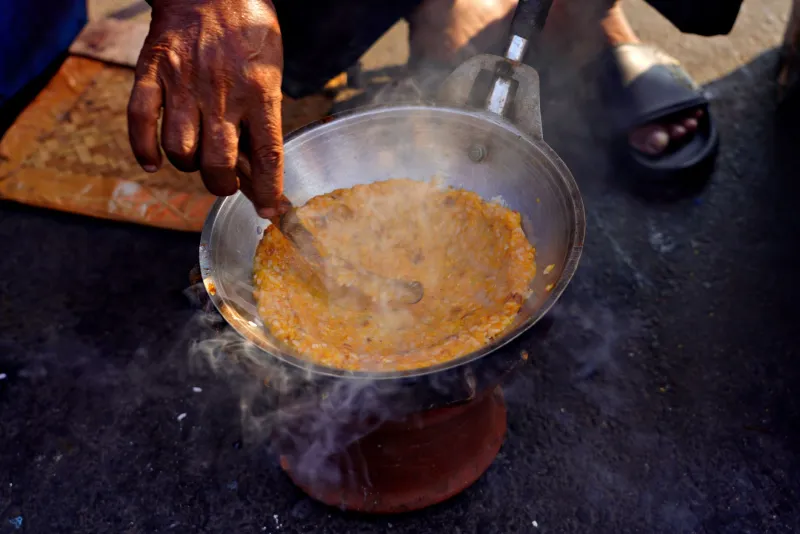
Dal Tadka — a simple lentil dish finished with a spiced butter — can go from dry lentils to table in about 25 minutes if you're using a pressure cooker or pre-soaked lentils. The flavor payoff is enormous relative to the effort. It's warm, protein-packed, and deeply satisfying in a way that a 10-minute pasta rarely manages.
Egg Bhurji is basically India's answer to scrambled eggs, loaded with onions, tomatoes, green chilies, and a handful of spices. Fifteen minutes, start to finish. It's the kind of dish home cooks in Mumbai make on Tuesday nights without thinking twice.
Chana Masala using canned chickpeas? Twenty minutes, max. The canned legume does the heavy lifting, and the spice base — onion, tomato, ginger, garlic, a few key spices — comes together in a single pan.
Palak Paneer with frozen spinach moves even faster. Thaw, blend, cook the paneer cubes, combine. You're looking at 20 to 25 minutes for a dish that feels genuinely restaurant-worthy.
"The secret a lot of home cooks don't realize," says Taaze Express chef Arjun, "is that Indian cooking is very technique-forward. Once you understand the base — how to build a masala, when to add your spices — the actual cooking time shrinks dramatically. It's not about hours. It's about order of operations."
The Taaze Express Speed Kitchen
At Taaze Express, the entire operation is built around this reality. The goal isn't just to deliver Indian food fast — it's to deliver food that actually tastes like it was made with care, even when the timeline is tight. That requires a specific set of kitchen techniques that the chefs here have refined over years of high-volume cooking.
One approach: building spice bases in advance. Rather than grinding and blooming spices from scratch for every single dish, the kitchen prepares foundational masalas that are ready to go. This is actually traditional — Indian home cooks have always kept prepared spice mixes on hand. The difference is just scale.
Another technique is managing heat aggressively. A lot of Indian cooking's depth comes from high-heat sautéing — getting onions properly caramelized, letting tomatoes cook down until they're almost jammy. That process can happen fast if you're not afraid of a hot pan. "Low and slow is for some dishes," Arjun explains. "But a lot of Indian cooking rewards confidence with the heat."
Finally, there's the art of knowing which flavors need time and which don't. Whole spices bloomed in hot oil release their flavor in under a minute. Fresh ginger and garlic paste cook in two. Ground spices need about 30 seconds of direct heat to lose their raw edge. Understanding those windows means you're never waiting around unnecessarily.
What This Means for Your Order
Here's the practical upshot: Indian food is a genuinely weeknight-friendly cuisine, whether you're cooking it yourself or ordering from a place that gets it right.
If you've been skipping Indian food during the week because it feels like a "weekend effort" kind of meal, that instinct is based on a myth. The dishes are there. The speed is there. And when you order from Taaze Express, you're getting all of that without any of the prep.
There's also something worth noting about the nutritional value packed into these fast dishes. Lentils, chickpeas, spinach, paneer — the ingredients that make up quick Indian meals are genuinely nutrient-dense. You're not trading health for convenience the way you might with a lot of fast options.
The Real Takeaway
Indian cuisine is vast. Some of it is elaborate, yes. Some of it is a weekend project you do because you love the process. But a huge, underappreciated part of it is fast, practical, and built for real life.
The myth that Indian food is too time-consuming has probably kept a lot of Americans from a lot of really good meals. Next time that thought creeps in on a Tuesday evening, maybe let it go. Whether you're reaching for a pan or reaching for your phone to open the Taaze Express app, a fresh, authentic Indian dinner is a lot closer than you think.