Why Your Couch Might Be the Best Seat in the House for Indian Food
Let's be honest: the conventional wisdom has always been that restaurant dining is the gold standard. White tablecloths, attentive servers, food delivered straight from a hot pan to your plate in under three minutes. That's the dream, right?
Except when it comes to Indian food, a surprising number of people are quietly breaking ranks. They're ordering delivery, settling into their own living rooms, and insisting—sometimes to the bewilderment of their foodie friends—that the meal tastes better than anything they've eaten at a sit-down spot. And here's the kicker: they might not be wrong.
There's a real, science-backed explanation for this, and once you hear it, you'll probably never look at your takeout container the same way again.
The Spice Bloom You Never Knew Was Happening
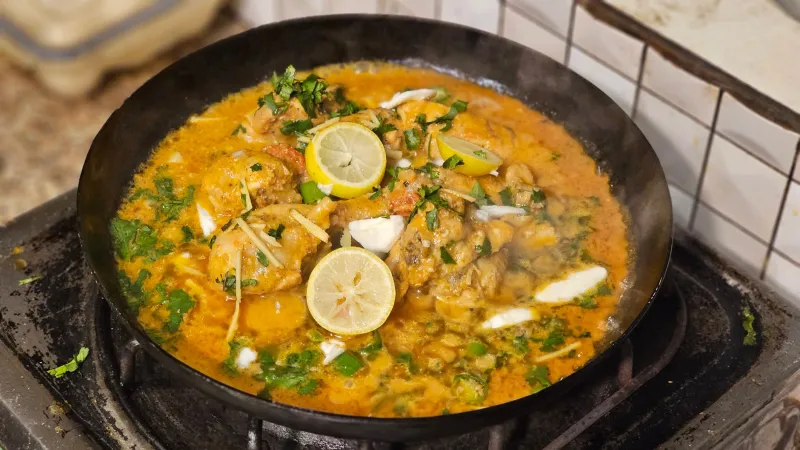
Indian cooking is built on a foundation of fat-soluble aromatics. Cumin, coriander, turmeric, cardamom, garam masala—these spices release their most potent flavor compounds when they're suspended in oil or ghee and subjected to heat. That process happens in the kitchen, obviously. But what most people don't realize is that it doesn't stop when the lid goes on.
When a curry or dal gets sealed into a container for delivery, it enters a kind of controlled environment. Steam builds up. Pressure increases slightly. The fat-soluble flavor molecules that were activated during cooking continue to meld and migrate through the dish. Food scientists sometimes call this "carry-over flavor development," and it's the same principle that makes a stew taste better on day two than day one.
In a restaurant, your food is plated and served almost immediately after it leaves the stove. You get the dish at its most technically fresh—but not necessarily at its most flavorful. With delivery, you're getting a dish that has had an extra 20 to 40 minutes to keep doing what Indian cooking does best: layering, deepening, and intensifying.
The Comfort Factor Is Real, and It Changes How You Taste
Here's something that doesn't get talked about enough: your environment directly affects your perception of flavor. This isn't soft psychology—it's documented in sensory science. Studies have shown that people rate the same food as more enjoyable when they're in a relaxed, familiar setting versus a noisy, stimulating one.
Restaurants, even great ones, introduce a surprising amount of low-level stress. Finding parking, waiting for a table, navigating the menu under mild social pressure, eating at someone else's pace. None of that is catastrophic, but it adds up. Your nervous system is slightly activated, and that affects everything from how your taste buds respond to how satisfied you feel afterward.
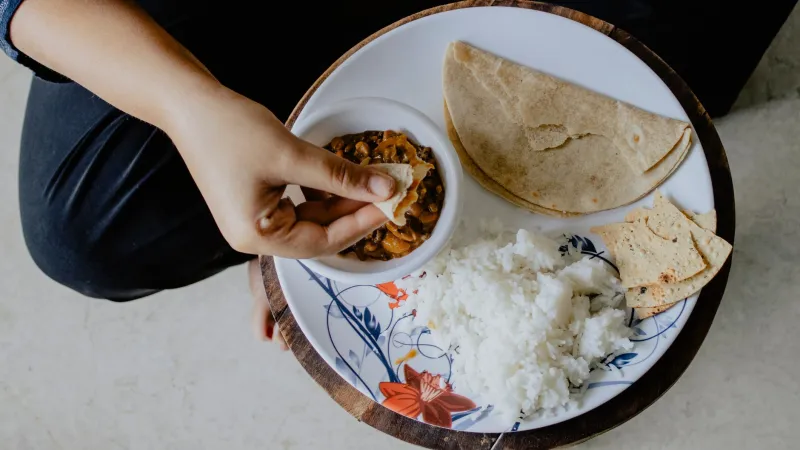
At home, you control the variables. Your playlist, your lighting, your pace. You can take a second to smell the dish before you dig in—which, by the way, is a huge part of how humans experience flavor in the first place. That relaxed state actually makes food taste better. Your couch isn't just comfortable; it's a flavor enhancer.
Customization Changes the Game More Than You Think
One of the underrated advantages of ordering Indian food for delivery is the ability to customize with zero awkwardness. At a restaurant, asking for your tikka masala at a two out of ten on the spice scale, with extra sauce, no cilantro, and a side of plain naan instead of garlic can feel like you're inconveniencing someone. So a lot of people don't ask. They eat something that's close to what they wanted, but not quite.
When you're ordering through an app or directly from a service like Taaze Express, that friction disappears entirely. You can dial things in precisely. And when a dish is built exactly to your preferences—your heat tolerance, your texture preferences, your dietary needs—it's naturally going to taste better to you than a more generic version. Personalization isn't just convenient; it's a legitimate culinary upgrade.
Timing Is Everything, and Delivery Lets You Own It
Another factor that rarely gets credited: you eat delivery food on your schedule, not the kitchen's. At a restaurant, your entrée arrives when it's ready, which may or may not align with when you're actually hungry. You might be mid-conversation, still working through your appetizer, or just not quite ready. But you eat anyway, because the food is there and it's hot.
With delivery, there's a natural pause built into the process. You order when you're starting to get hungry, the food arrives when you're genuinely ready, and you eat at peak appetite. Hunger is, in a very real sense, the best seasoning. The timing alignment that delivery creates means you're almost always eating Indian food in the optimal window—not too soon, not too late.
Fresh Ingredients Packed Right Make a Difference
Not all delivery is created equal, and this is where the quality of the service matters enormously. The Indian food delivery paradox only holds up when the food is genuinely fresh—made to order, packed carefully, and built with ingredients that can handle the transit process without falling apart.
Dishes like butter chicken, lamb rogan josh, chana masala, and dal makhani are actually engineered by their culinary history to improve with a little rest time. These are slow-cooked, spice-forward dishes that were designed for a world before refrigeration, where meals simmered for hours and were eaten when ready, not when convenient. They're structurally suited for delivery in a way that, say, a delicate piece of seared fish simply isn't.
At Taaze Express, that's the whole philosophy. Every dish is made fresh, packed at the right moment, and built from recipes that know how to travel. The goal isn't to replicate restaurant dining—it's to deliver something that's genuinely optimized for the way most Americans actually eat: at home, on their terms, with flavors that arrive ready to impress.
So Is the Restaurant Dead? Not Exactly.
Look, a great Indian restaurant experience—warm bread from a tandoor, the smell of a kitchen in full swing, the theater of it all—has its own irreplaceable magic. Nobody's arguing that. But the idea that delivery is automatically a compromise, a lesser version of the real thing? That's worth questioning.
For Indian food specifically, the science and the experience both suggest that delivery done right can hold its own. Sometimes it can even edge ahead. The next time your food arrives and you think it tastes particularly good, don't assume you're imagining things. You might just be eating a dish that's been quietly getting better the whole way to your door.