Why Your Weekend Indian Order Takes Forever (And the Tricks That Get It There Faster)

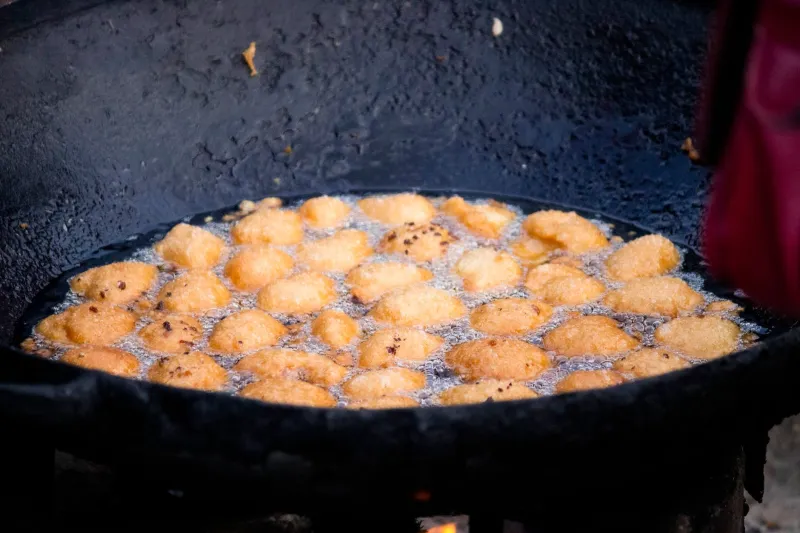
Photo: Tim Sackton from Somerville, MA, CC BY-SA 2.0, via Wikimedia Commons
You've been thinking about butter chicken since Wednesday. Friday finally rolls around, you tap through the app, and the estimated delivery time reads: 55–70 minutes. What happened to the breezy 25-minute window you got on Tuesday afternoon?
Welcome to the weekend Indian delivery paradox — a very real, very frustrating phenomenon that has less to do with laziness and everything to do with how Indian kitchens actually operate under pressure.
The Friday Night Surge Is Unlike Anything Else in Food Delivery
Most cuisines see a predictable bump on weekends. Indian restaurants experience something closer to a tidal wave. Between 6 and 9 PM on Fridays and Saturdays, order volume at many Indian restaurants in major US cities can spike anywhere from 200 to 400 percent compared to a typical Tuesday evening. That's not a typo.
Part of this is cultural. Indian food has become America's go-to "special occasion at home" meal — the thing people order when they want to feel like they're treating themselves without leaving the couch. That positioning is great for business, but it creates a brutal concentration of demand in a very narrow time window.
Restaurant owners will tell you the same thing: the problem isn't making the food. It's that everything has to happen at once.
The Curry Doesn't Lie: Why Indian Food Is Harder to Rush Than Pizza
Here's what a lot of people don't realize about Indian cooking — it doesn't scale up the same way a pizza operation does. You can't just throw more dough on more trays. Many foundational Indian dishes require layered cooking processes: blooming whole spices, building a masala base, slow-simmering proteins, finishing with cream or butter at exactly the right moment.
Shortcut any of those steps and the dish tastes flat. It tastes like delivery food instead of restaurant food. Any kitchen worth its salt refuses to do that.
So when 40 orders come in during the same 20-minute window on a Saturday night, the kitchen doesn't magically speed up. The line just gets longer.
This is where smart prep strategy becomes everything. At Taaze Express, the approach leans heavily on what's called "component cooking" — building the foundational elements of popular dishes in advance during slower parts of the day, so the final assembly during peak hours is fast without sacrificing flavor depth. The gravy bases, the marinated proteins, the par-cooked lentils — all of it is ready and waiting before the surge hits.
The Delivery Driver Crunch Nobody Talks About
Even when the kitchen is humming, there's a second bottleneck that most customers never think about: the last mile.
Weekend evenings are when delivery demand across every platform peaks simultaneously. Your Indian food is competing for driver availability against pizza, sushi, burgers, and Thai food — all at the exact same moment. When platforms run short on available drivers, orders sit on the pass-through counter, getting cold, while the restaurant watches helplessly.
This is one of the underappreciated arguments for ordering directly from a restaurant that manages its own delivery logistics rather than relying entirely on third-party apps. When a restaurant controls its own driver pool — or has dedicated agreements with a smaller, reliable network — it can prioritize dispatch in ways that third-party platforms simply can't.
Technology matters here too. Real-time order batching, dynamic routing, and predictive staffing models aren't just buzzwords — they're the difference between a 28-minute delivery and a 58-minute one on a Saturday night.
The Strategic Orderer's Playbook
So what can you actually do about all of this? Quite a bit, it turns out.
Order before the wave, not during it. The single most effective move is placing your order between 5:00 and 5:45 PM on Friday or Saturday. You'll catch the kitchen before it's overwhelmed, and drivers are still available. Your food arrives hotter, faster, and with less stress for everyone involved.
Avoid the 7 to 8 PM dead zone. This is peak chaos hour at almost every Indian restaurant in America. If you order at 7:15 on a Friday, you're in the middle of the worst possible window. Either order earlier or push it to 8:30 when the initial rush starts to thin.
Lean into dishes that travel and hold well. Dal makhani, chana masala, and slow-cooked curries are more forgiving during a longer wait than something like a dosa or a fresh bread that needs to be eaten immediately. If you're ordering during peak hours, choose accordingly.
Call it in directly when things get hairy. Apps are convenient, but a quick phone call to the restaurant during a busy night can sometimes give you real information about wait times — and occasionally, a restaurant will flag your order for priority if you're a regular or if you ask politely.
What Taaze Express Does Differently on Weekends
The operational answer to weekend chaos isn't just "hire more people" — though staffing is absolutely part of it. It's about building systems that anticipate the surge rather than reacting to it.
That means extended prep windows starting early Friday afternoon, additional line staff on weekend shifts, and a technology layer that monitors incoming order volume in real time and adjusts kitchen pacing accordingly. It also means being honest with customers about timing when demand spikes — a realistic 40-minute estimate beats a wishful 25-minute one that turns into 55.
The goal isn't to eliminate the weekend challenge. It's to make sure that when your order leaves the kitchen, it's been made the right way — and that it gets to you while it still tastes like it was.
The Bottom Line
The weekend Indian delivery crunch is real, it's structural, and it's not going away anytime soon. But armed with a little inside knowledge, you can mostly sidestep it. Order early, choose wisely, and pick a restaurant that has clearly thought about how to handle the rush. Your Saturday night butter chicken will thank you.