What's Actually Keeping Your Curry Hot by the Time It Hits Your Door

Photo: स्विग्गी, Public domain, via Wikimedia Commons
You've been there. You open the delivery bag, lift the lid off your tikka masala, and instead of that gorgeous steam rising to meet you, you get a lukewarm disappointment that smells vaguely of cardboard. Compare that to the nights when everything arrives so hot it fogs your glasses—and somehow tastes exactly like it came straight off the stove. Same dish. Same restaurant. Totally different experience.
So what's the variable? More often than not, it's the container.
Indian cuisine is genuinely one of the harder foods to transport well. You've got layered spice profiles built up over time, emulsified sauces that can break if they cool unevenly, aromatics that dissipate fast once heat drops, and textural contrasts—think crispy pakoras next to silky dal—that require completely different handling. Getting all of that to survive a 20-minute drive across town is, quietly, a feat of applied engineering.
Why Temperature Matters More for Indian Food Than You Might Think
Heat isn't just about comfort. For Indian food specifically, temperature is a delivery mechanism for flavor.
Many of the volatile aromatic compounds in spices like cumin, coriander, garam masala, and fenugreek are temperature-sensitive. They activate and release their full fragrance profile at higher temperatures, which is why your kitchen smells incredible when a curry is simmering but that same dish can seem almost muted when it's been sitting at 100°F for a while. The spices are still there—they're just not performing.
This is especially true for dishes built around a tarka or tadka (that final bloom of whole spices in hot oil), where the aromatic punch is almost entirely heat-dependent. A dish that arrives genuinely hot isn't just more pleasant—it's literally more flavorful at a chemical level.
The Container Breakdown: What's Actually in That Bag
Not all takeout containers are created equal, and the Indian restaurant industry has gotten increasingly serious about this distinction. Here's what the smarter operations are doing differently:
Foil and foil-laminate containers remain the gold standard for hot curries and rice dishes. Aluminum reflects radiant heat back toward the food rather than absorbing it, which slows temperature loss significantly compared to plain plastic. Many higher-end Indian spots use foil containers with tight-fitting lids that create a small steam pocket inside—essentially a mini pressure environment that keeps moisture locked in and temperatures elevated.
Double-walled paper containers have become popular for dry dishes and bread items. Naan and roti are notoriously difficult to transport because steam trapped against the bread makes it soggy, but steam that escapes entirely leaves it dry and stiff. Double-walled containers allow just enough ventilation to prevent sogginess while still retaining enough warmth to keep the bread pliable. It's a balance that took a lot of trial and error to get right.
Compartmentalized packaging is another upgrade worth paying attention to. Indian meals often involve multiple components—rice, curry, raita, chutney, bread—that all have different ideal temperatures and moisture levels. Restaurants that use divided containers or nest separate sealed portions inside a single bag are keeping those components from affecting each other during transit. Your raita should be cool. Your biryani should be hot. Mixing them before you're ready ruins both.
Insulated Bags: The Outer Layer That Does a Lot of Quiet Work
The container is only part of the equation. What the container rides inside matters just as much.
Professional-grade insulated delivery bags—the thick, quilted ones you see serious couriers using—can maintain food temperature for 30 to 45 minutes in moderate weather conditions. Restaurants that invest in these bags (and actually use them properly, meaning they're zipped and sealed) are giving their food a fighting chance across longer delivery distances.
The difference between a restaurant that tosses your order into a standard paper bag versus one that uses a properly sealed thermal bag is often the difference between 140°F and 110°F at your door. That 30-degree gap is the gap between a great meal and a mediocre one.
Weather plays a role too, which is why you might notice delivery quality dipping in winter months if a restaurant hasn't adjusted its packaging strategy for cold-weather conditions. Some places add an extra layer of foil wrapping during colder months. Others have switched to thicker insulated bags year-round. These aren't small details—they're deliberate operational choices.
How to Tell If a Restaurant Is Taking This Seriously
You don't have to take anyone's word for it. There are a few things you can check before and after your order that signal whether a place has invested in quality delivery infrastructure:
Check the bag seal when it arrives. A properly sealed insulated bag or at minimum a tightly closed paper bag with foil-wrapped containers inside is a good sign. If your food arrives in a flimsy plastic bag with loose lids, that's a red flag before you've even opened anything.
Notice whether items are separated. Restaurants that send everything jumbled together in one container haven't thought much about transit. Places that individually seal each dish and keep dry items away from wet ones have clearly put thought into the journey.
Steam test your first bite. This sounds obvious but it's actually informative. If the first thing you eat after opening a container is noticeably hotter than the second, that's a sign the food has been sitting open and cooling unevenly. Properly insulated containers maintain more uniform temperature throughout.
Read reviews specifically for delivery quality. On Yelp, Google, or wherever you order, filter for reviews that mention delivery. Phrases like "arrived hot," "still steaming," or conversely "lukewarm" and "soggy naan" tell you a lot about a restaurant's packaging practices in real-world conditions.
What This Means for How You Order
Armed with this knowledge, a few small adjustments can meaningfully improve your delivery experience:
Order for a shorter window when possible. Even the best insulation has limits. A 15-minute delivery is always going to outperform a 45-minute one, all else being equal. When you have flexibility, use it.
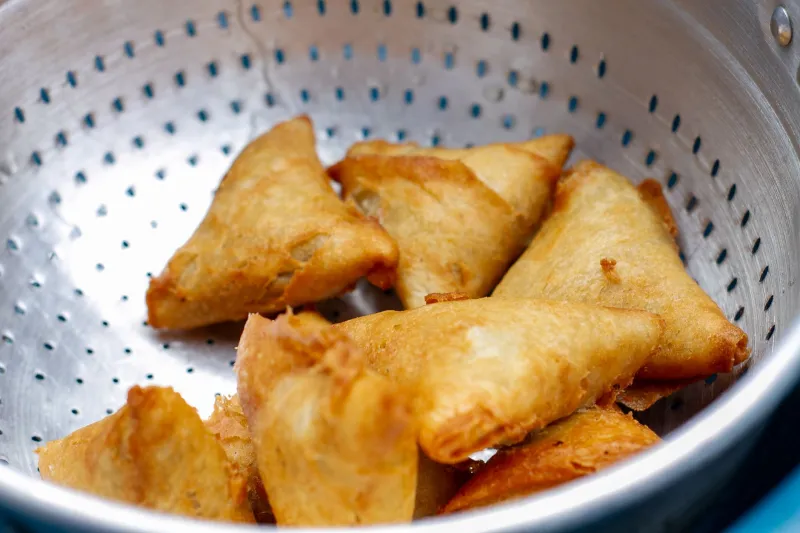
Ask for sauces on the side if you're ordering something that's prone to sogginess—samosas, for instance, or anything with a crispy element. Keeping the sauce separate until you're ready to eat preserves both the texture and the temperature differential.
Don't let the bag sit. It sounds basic but it's worth saying: the moment your delivery arrives is the peak of its quality. Every minute it sits on your counter while you finish a phone call or track down a fork is a minute of degradation. Have your table set before the driver rings the bell.
The Bigger Picture
What's happening in Indian restaurant kitchens and packaging decisions across the country is actually a pretty fascinating story about a cuisine adapting to a new distribution model without losing what makes it special. The spice complexity, the layered aromatics, the textural contrasts—all of it was designed for a plate that travels about three feet from stove to table. Making it work across city blocks requires genuine ingenuity.
The restaurants getting this right aren't just delivering food. They're delivering an experience that holds up. And increasingly, that packaging intelligence is as much a part of the meal as the masala itself.