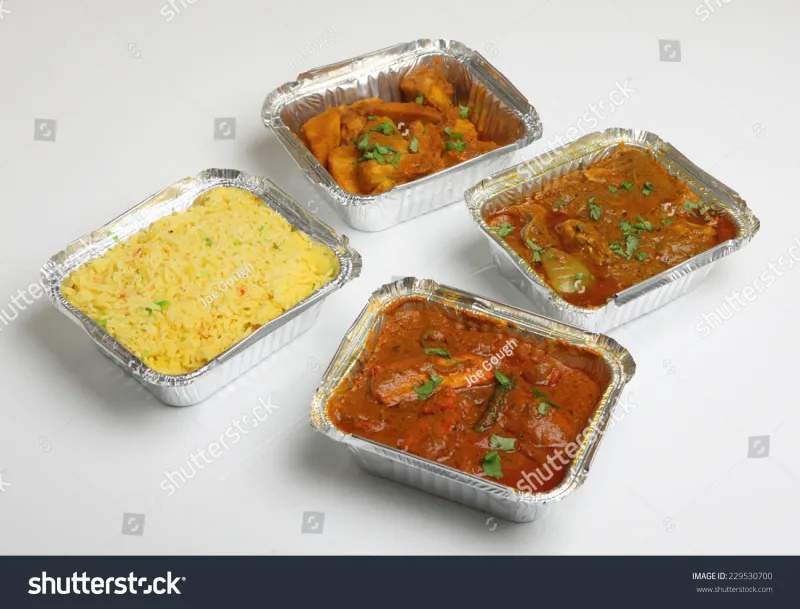
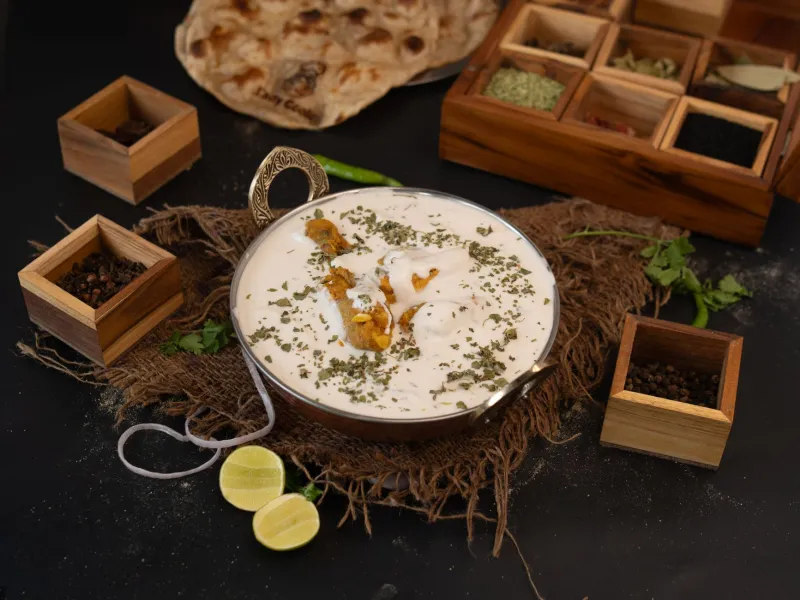
The Dirty Secret About Cooking Indian Food at Home (And Why Delivery Is the Smarter Move)
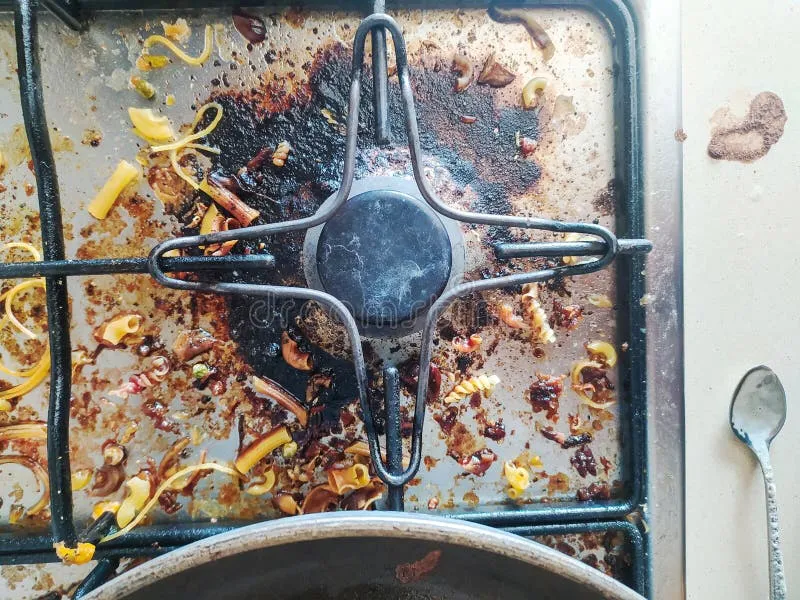
Photo: messy stovetop after cooking Indian food with spices and turmeric stains, via thumbs.dreamstime.com
Let's be real for a second. You've watched the YouTube videos. You've bought the whole spices, the cast iron pan, maybe even a proper kadai from an Indian grocery store forty minutes from your house. You followed the recipe step by step, and honestly? The curry was pretty good.
Then you looked at your kitchen.
Yellow everything. The backsplash. The dish towel you grabbed without thinking. The wooden spoon that will never fully recover. A film of fragrant oil clinging to every surface within a three-foot radius of the stove. And the smell — that deep, gorgeous, lingering smell of toasted cumin and charred onion — embedded in your curtains for the next four days.
This is the paradox at the heart of Indian cooking. The same qualities that make it so deeply satisfying to eat are the exact qualities that make it genuinely brutal to clean up after. And once you understand why that is, outsourcing the whole operation starts to feel less like laziness and more like a completely rational life decision.
Why Indian Cooking Is So Gloriously Messy
Traditional Indian cooking relies on a process called the tadka — the technique of blooming whole spices in hot oil or ghee before adding other ingredients. Mustard seeds pop. Dried chilies blister. Curry leaves hit the fat and crackle like tiny fireworks. It's theatrical, it's aromatic, and it sends a fine mist of spiced oil in every direction.
That oil doesn't just land on your stove. It polymerizes. Meaning it forms a thin, almost varnish-like layer that bonds to surfaces at the molecular level. Regular dish soap and a sponge? You're going to need more than that. This is why Indian home cooks — the ones who've been doing it for decades — often have dedicated cooking spaces, powerful exhaust fans, and a very specific cleaning routine that took years to develop.
Then there's turmeric. Curcumin, the compound that gives turmeric its vivid yellow-orange color, is both fat-soluble and notoriously stubborn. It binds to plastic, stains grout, and laughs in the face of your countertop cleaner. A tiny pinch can redecorate your kitchen in ways you didn't ask for.
And ghee — clarified butter that's been simmered until the milk solids caramelize — has a smoke point that encourages high-heat cooking, which is great for flavor development and terrible for keeping your kitchen looking like a normal person lives there.
The Flavor Persistence Problem (That's Actually a Feature)
Here's something interesting: the same compounds responsible for the cleanup chaos are also responsible for why Indian food tastes so complex and lingers so pleasantly on your palate.
Fat-soluble flavor molecules — the ones carried by ghee, coconut oil, and mustard oil — bind to receptors in your mouth differently than water-soluble ones. They coat and linger. That's why a well-made dal or a properly spiced lamb curry keeps delivering flavor long after you've swallowed. It's not just heat. It's a sustained, layered experience that unfolds over several minutes.
The aromatics that escaped into your kitchen air during cooking? Those same volatile compounds are still present in the dish itself, contributing to what food scientists call retronasal aroma — the smell you perceive from inside your mouth as you eat. It's a huge part of why Indian food feels so immersive compared to, say, a grilled chicken breast.
The irony is that all of this richness comes with a cost: the kitchen takes the hit so your taste buds can win.
What Professional Kitchens Handle That You Don't See
A restaurant kitchen cooking Indian food at volume has infrastructure built specifically for this kind of cooking. Commercial hood vents that pull air at thousands of cubic feet per minute. Steel surfaces that can be scrubbed with industrial degreasers. Dedicated prep cooks whose entire job involves mise en place — every spice measured, every onion diced, every marinade mixed before service begins.
The chef isn't stopping mid-cook to wipe down the stove. The person plating your dish isn't also doing the dishes. There's a whole system designed to absorb the chaos so that what arrives in front of you is pure, uninterrupted flavor.
When you order delivery from a place that takes its food seriously, you're not just paying for ingredients and labor. You're paying for that system. You're buying into an operation where the mess is someone else's problem and the result is a dish that was cooked with full attention, proper equipment, and zero compromise.
The Mental Load Nobody Talks About
There's a psychological dimension to this that doesn't get enough credit. Cooking a complex meal and then immediately facing a disaster zone doesn't just create physical work — it creates a specific kind of mental fatigue that can actually color how you remember the meal.
Researchers who study the psychology of eating have found that the conditions surrounding a meal significantly affect how satisfying we perceive it to be. Stress before or after eating — including the anticipatory dread of a big cleanup — can diminish the pleasure of even a genuinely delicious dish.
In other words, if part of your brain is already cataloging the pots that need soaking while you're still eating, you're not fully present for the food. You're splitting your attention between the lamb rogan josh in front of you and the crime scene waiting in the kitchen.
Delivery removes that entirely. You eat. You enjoy. You toss the containers. The experience is clean, both literally and cognitively.
Eating Well Without the Aftermath
None of this means you should never cook Indian food at home. If you love the process — the ritual of tempering spices, the satisfaction of building a sauce from scratch — that's a completely valid reason to keep doing it. Cooking is pleasurable for a lot of people, cleanup and all.
But for the busy weeknight, the post-work exhaustion, the night when you want something genuinely nourishing and complex without committing two hours to preparation and another forty-five minutes to restoration — delivery isn't a compromise. It's the intelligent choice.
You get the full sensory experience: the layered spices, the slow-cooked depth, the fat-soluble richness that coats your palate and keeps delivering flavor through the last bite. What you don't get is the turmeric-yellow dish towel situation.
At Taaze Express, that's kind of the whole point. Fresh, authentic Indian food that arrives fast and tastes like someone who actually knows what they're doing made it — because they did. And when dinner's over, your kitchen looks exactly the way you left it.
That's not a small thing. That might actually be the best part.