Eating Late Without the Regret: How to Order Indian Food at Night and Actually Sleep Well
It's 10:30 PM. You're hungry, the kitchen is closed (at least in your head), and the delivery apps are calling your name. Most people assume the smart move is to grab a slice of pizza or a burger and deal with the consequences. But here's what those people are missing: a well-chosen Indian meal might actually be one of the better things you can put in your body before bed.
Not all late-night eating is created equal. And Indian food — with its centuries-old tradition of using spices as medicine — has some genuinely surprising advantages when the sun goes down. The key is knowing which dishes work with your body after hours and which ones will keep you up scrolling your phone until 2 AM.
Why Late-Night Eating Gets a Bad Rap (And When It's Actually Fine)
The blanket rule that "eating late is bad" is a little too simple. What matters more is what you eat and how much of it lands in your stomach before you hit the pillow. A massive, greasy meal close to bedtime? Yeah, that's going to cause problems — your digestive system slows down in the evening, and overloading it means discomfort, acid reflux, and broken sleep.
But a moderate, well-composed meal with the right ingredients? That's a different story. In fact, going to bed mildly hungry can disrupt sleep just as much as going to bed overstuffed. Your body needs a little fuel to maintain the repair work it does overnight. The goal isn't to avoid food — it's to choose food that supports rest rather than fighting it.
That's where Indian cuisine has a quiet edge.
The Spices That Actually Help You Wind Down
Traditional Indian cooking leans heavily on ingredients that have been used in Ayurvedic medicine for thousands of years — many of which have real, documented effects on the nervous system and digestion.
Turmeric is probably the most talked-about. Its active compound, curcumin, has anti-inflammatory properties that may help reduce the kind of low-grade physical tension that makes it harder to relax. Golden milk (haldi doodh) has been a bedtime ritual in Indian households forever — and Western wellness culture has only recently caught up.
Cardamom is another one worth knowing. It has a mild calming effect and is often used in Indian desserts and chai blends. It also supports digestion, which means less bloating keeping you awake.
Cumin and coriander, both staples in everyday Indian cooking, are known digestive aids. They help your gut process food more efficiently, which matters a lot when you're eating in the evening and your digestive system isn't running at full speed.
And then there's warm milk with saffron — a combination that shows up in Indian households when someone can't sleep. There's actual science behind it: tryptophan in milk supports melatonin production, and saffron has shown mild sedative effects in some research.
The Dishes to Order When You Want to Sleep Like a Rock
Not every item on the menu is a good late-night call. Here's what to reach for:
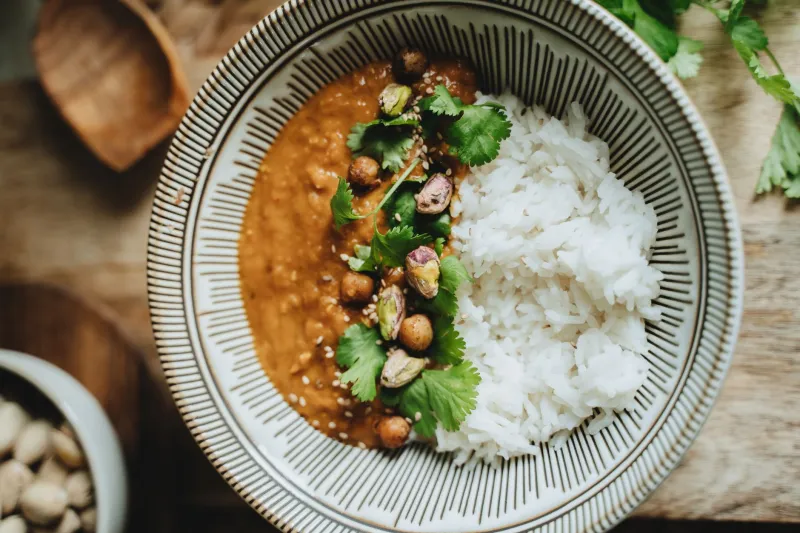
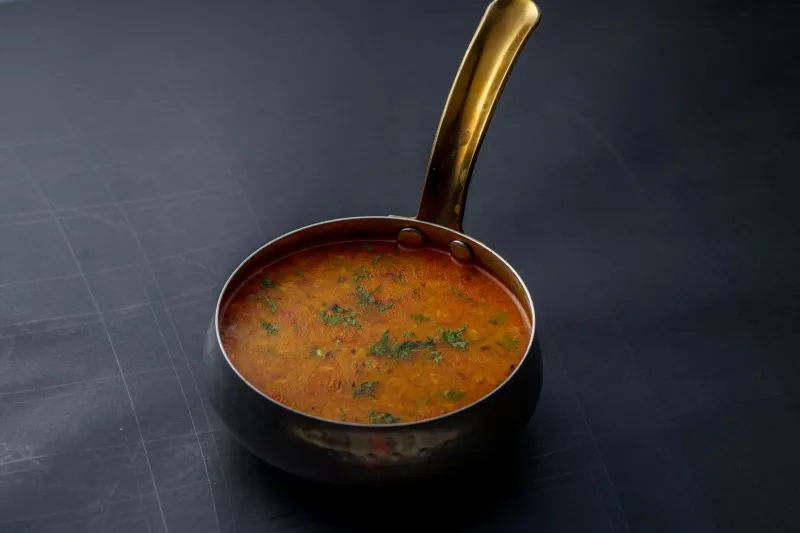
Dal (lentil soup or curry) is probably the single best late-night Indian order. Lentils are rich in tryptophan — the same compound in turkey that everyone blames for post-Thanksgiving drowsiness. They're also high in magnesium, a mineral that plays a direct role in sleep quality. Dal is warm, comforting, easy to digest, and won't sit in your stomach like a brick.
Khichdi — a soft, simple combination of rice and lentils cooked together — is essentially the Indian version of comfort food designed for when your body needs a break. It's gentle on the digestive system, mildly spiced, and satisfying without being heavy. Think of it as the chicken soup of South Asian cooking.
Saag (spinach-based dishes) are another solid choice. Leafy greens are loaded with calcium, which helps the brain use tryptophan to produce melatonin. Saag paneer gives you that plus the protein from the cheese, making it a surprisingly smart evening option.
Raita, the yogurt-based side dish, is worth adding to any late-night order. Yogurt contains both tryptophan and calcium, and the probiotics support gut health — which is increasingly linked to better sleep in nutrition research.
Plain basmati rice has a higher glycemic index than you might expect, which sounds like a negative but in the evening can actually work in your favor. A mild insulin response from carbs helps shuttle tryptophan to the brain more effectively. It's one reason a small portion of rice with your dal at night isn't the enemy.
What to Avoid After Dark
This is where a lot of people go wrong with late-night Indian food. The dishes that are fantastic at lunch can become sleep disruptors at night.
Heavily spiced vindaloos or extra-hot curries are a problem not because spice itself is bad, but because the heat response they trigger — elevated heart rate, raised body temperature — is the opposite of what your body needs to wind down for sleep. Your core temperature actually needs to drop slightly to initiate sleep, and a fiery vindaloo works against that.
Fried appetizers like samosas or pakoras are fine in moderation, but late at night, the fat content slows digestion significantly and can cause the kind of uncomfortable fullness that makes lying down miserable.
Caffeinated chai is an obvious one, but worth saying: a strong, milky chai ordered late might feel soothing, but the caffeine is real. If you want a warm drink with your order, ask for a mild version or skip the tea entirely and let the meal do the work.
Restaurant-style butter chicken in heavy cream sauce — delicious, yes, but the richness and fat content make it a tough late-night choice. If you love it, save it for lunch.
How to Order Smart at Night
The practical move is to keep your late-night Indian order simple and moderate in size. A bowl of dal, a small portion of rice, maybe some saag or a side of raita — that's a complete, satisfying meal that won't leave you feeling like you made a mistake. You don't need to order the full spread.
Portion size matters more at night than almost any other factor. Even the most sleep-friendly foods become a problem if you eat three times what your body actually needs.
At Taaze Express, the menu is built around fresh preparation and real ingredients — which means you're getting the actual benefits of those spices and legumes, not a processed approximation of them. That freshness makes a real difference when you're relying on food to do something specific, like help you wind down.
The Bottom Line
Late-night cravings are normal. Fighting them completely isn't always realistic, and honestly, it isn't always necessary. The smarter play is to make choices that satisfy the craving and support what comes next — which, at 10:30 PM, should be a good night's sleep.
Indian food, ordered thoughtfully, is genuinely one of the better options you have. Warm, flavorful, full of ingredients your body can actually use overnight — it's the kind of meal that earns its place on the late-night menu. Just skip the vindaloo and put down the chai, and you're in good shape.