Beyond the Veggie Burger: How Indian Vegetarian Food Is Winning Over America's Most Committed Meat Eaters
Let's be honest. When most Americans hear "vegetarian restaurant," their brain immediately goes to sad bowls of underdressed greens, rubbery tofu cubes, and a lingering sense that dinner is punishing them for something. It's a deeply unfair association — and Indian cuisine has been quietly dismantling it for hundreds of years.
The irony is that India has one of the world's oldest, most sophisticated vegetarian food traditions, and it took a wave of American health consciousness, a few viral food videos, and a growing curiosity about global flavors for people here to finally sit up and notice. The dosa — that impossibly thin, golden-crisp fermented crepe — has become something of a poster child for this awakening. But honestly, it's just the beginning of what Indian vegetarian cooking has to offer.
Why Indian Vegetarian Food Hits Different
Here's the thing that separates Indian vegetarian cooking from most Western plant-based attempts: it was never designed as a substitute for anything. It didn't start as a workaround or an alternative. It simply is — a fully realized culinary tradition built around vegetables, legumes, dairy, and spices that have been refined over generations to deliver maximum satisfaction.
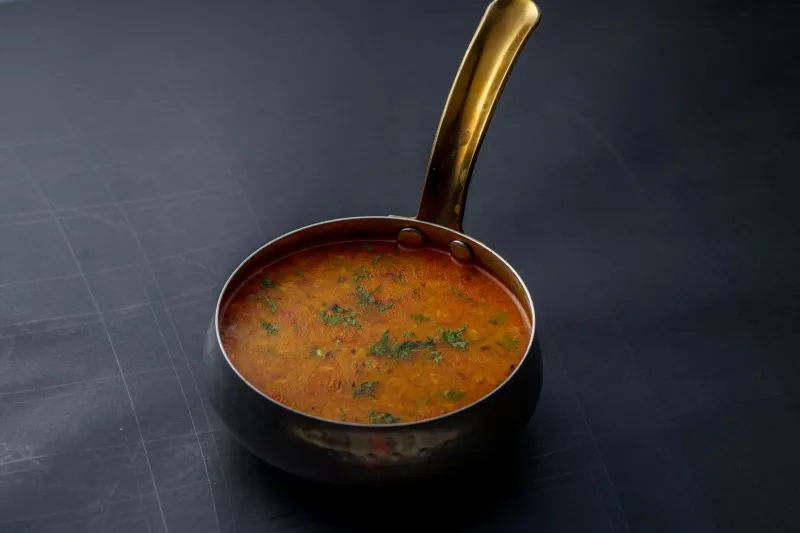
Take a dish like chana masala. You've got chickpeas — loaded with protein and fiber — simmered low and slow in a sauce built on tomatoes, onions, ginger, garlic, and a spice blend that adds depth most American comfort foods never reach. Or consider dal makhani, a slow-cooked lentil dish so rich and buttery that first-timers routinely assume it contains meat. These aren't salads with aspirations. They're genuinely hearty, filling, deeply flavored dishes that happen to contain zero animal protein.
The spices do a lot of the heavy lifting here. Cumin, coriander, turmeric, garam masala — these aren't just flavor agents. They create complexity, warmth, and that hard-to-describe quality that keeps you thinking about a meal hours after you've finished it. It's why Indian vegetarian food satisfies in a way that a plain roasted vegetable plate simply cannot.
The Nutritional Case Is Pretty Compelling
Beyond the flavor conversation, there's a real nutritional story worth telling. Indian vegetarian dishes are frequently built around combinations that Western dietitians spend entire consultations trying to get their clients to achieve naturally.
Lentils and rice together form a complete protein — meaning they deliver all nine essential amino acids your body can't produce on its own. Pair that with a side of saag paneer (spinach and fresh cheese) and you're looking at iron, calcium, and folate in a single meal. Add a yogurt-based raita, and you've got probiotics, too. This isn't accidental. Generations of cooks and Ayurvedic practitioners figured out how to build nutritionally balanced meals long before macros became a topic on fitness podcasts.
For Americans who are trying to reduce their meat consumption — whether for health, environmental, or ethical reasons — Indian cuisine offers a path that doesn't feel like deprivation. That's a genuinely big deal. Dietary change is hard when every plant-based option feels like a consolation prize. It's a lot easier when the alternative is a perfectly spiced bowl of rajma over basmati rice.
The Dosa Moment
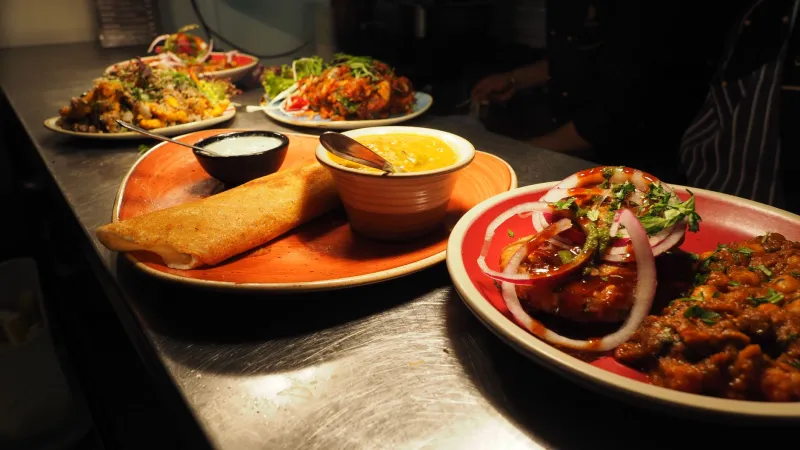
If one dish deserves credit for cracking open American curiosity about Indian vegetarian food, it might be the dosa. Social media has been relentlessly kind to it — and for good reason. The visual drama of a two-foot-long crispy crepe arriving at a table is genuinely hard to ignore.
But the dosa earns its hype on flavor alone. The batter, made from fermented rice and lentils, develops a subtle tang that gives the finished crepe a complexity most flatbreads don't come close to. Fill it with masala potato — spiced, golden, fragrant — and serve it alongside sambar (a lentil-based vegetable stew) and coconut chutney, and you've got a meal that covers multiple food groups while tasting like something you'd drive across town for.
First-time dosa eaters often describe a moment of genuine surprise. They expected something light and insubstantial. What they got was a meal that kept them full for hours. That gap between expectation and reality is exactly where a lot of American converts to Indian vegetarian food are made.
Meat Eaters Are Noticing
Here's a pattern that anyone who's worked in an Indian restaurant or food delivery space will recognize: the person who orders Indian food "for their vegetarian friend" often ends up ordering the vegetarian dishes themselves. Not because they felt obligated to, but because the palak paneer looked better than they expected, or someone handed them a bite of aloo gobi and they couldn't stop thinking about it.
This isn't anecdotal. There's a growing segment of self-identified meat eaters in the US who are actively building Indian vegetarian dishes into their regular rotation — not as a health project, but because the food is genuinely good. The satisfaction factor is there. The flavor is there. The variety is absolutely there.
At Taaze Express, we see this play out constantly. Customers who initially order butter chicken or lamb rogan josh start branching out after a few orders. They try the dal. They get curious about the vegetable biryani. They discover that paneer — Indian fresh cheese — has a texture and richness that holds up to any protein they've eaten before. And then they're ordering entirely vegetarian meals without making a big philosophical statement about it. They just want what tastes good.
Variety Is the Real Secret Weapon
One of the most persistent myths about vegetarian food is that it's monotonous. Indian cuisine blows that assumption apart completely. The regional diversity alone is staggering — South Indian cuisine (think dosas, idlis, sambar) looks almost nothing like North Indian vegetarian cooking (paneer dishes, dal, stuffed parathas), which is again completely different from the street food traditions of Gujarat or the coastal flavors of Kerala.
This means that someone eating Indian vegetarian food has access to a range of textures, spice levels, cooking methods, and flavor profiles that could keep them genuinely interested for months without repeating a dish. That's not something most plant-based meal plans can claim.
Fresh Makes All the Difference
All of this — the nutrition, the variety, the satisfaction factor — depends heavily on quality. Indian vegetarian food prepared with fresh ingredients, whole spices, and real technique is a transformative experience. The same dishes made with shortcuts, pre-mixed powders, or ingredients that have been sitting around too long are a completely different — and far less convincing — story.
It's why sourcing and freshness matter so much at Taaze Express. The goal is always to deliver that genuine, made-with-care experience that turns a first-timer into a regular. Because once someone tastes Indian vegetarian food at its actual best, the old assumptions about plant-based eating being bland or boring don't really survive the meal.
America is in the middle of a slow but real shift in how it thinks about food — what's satisfying, what's healthy, what's worth ordering on a Tuesday night. Indian vegetarian cuisine has been ready for this moment for centuries. It's just nice that people are finally showing up to the table.