Stop Ordering the Same Sad Salad: Why Indian Food Is the Smartest Delivery Choice for Busy, Health-Focused Americans
The Delivery Dilemma Nobody Talks About
You've had a full day. Back-to-back meetings, a commute that took twice as long as it should have, and a to-do list that somehow got longer by 6 PM. You open a delivery app, scroll past the burgers and the pizza, click on the "healthy" filter, and end up staring at a $17 salad that you know is going to leave you hungry again by 9 PM.
Sound familiar? You're not alone. Millions of busy professionals across the US face this exact tension every weekday — the very real need for convenient, fast food that doesn't completely undermine their health goals. And most of the time, the options feel like a choice between satisfying and nutritious, never both.
But here's the thing: Indian food has been solving this problem for thousands of years, and a growing number of nutritionists, fitness enthusiasts, and working Americans are finally catching on.
Let's Address the Elephant in the Room: Is Indian Food Actually Healthy?
Fair question. The reputation of Indian food in the US has been shaped largely by buffet-style restaurants and heavily cream-based dishes that are, honestly, the richest end of a very diverse culinary spectrum. Butter chicken and naan are delicious — no argument there — but they're about as representative of everyday Indian cooking as a plate of fettuccine Alfredo is of Italian cuisine.
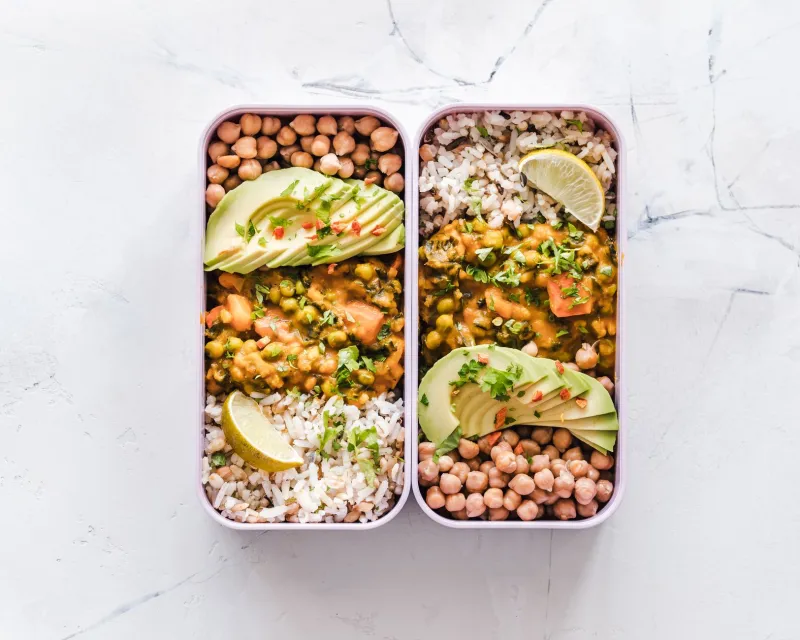
Authentic, home-style Indian cooking looks quite different. It leans heavily on legumes like lentils and chickpeas, vegetables cooked with spices rather than butter, lean proteins marinated in yogurt and aromatics, and whole grains like basmati rice and whole wheat roti. The fat sources are often heart-healthy oils and small amounts of ghee used purposefully rather than liberally.
"The base of Indian cooking is fundamentally anti-inflammatory," says registered dietitian and wellness coach Priya Mehta, who works with endurance athletes in the Chicago area. "Turmeric, ginger, black pepper, cumin — these aren't just flavor. They have measurable effects on inflammation, digestion, and metabolic health. When you're eating Indian food that's made fresh with real spices, you're getting functional nutrition alongside great taste."
The Spice Factor: Why It Matters More Than You Think
Most fast food and standard delivery options are built around salt, sugar, and fat as the primary flavor drivers. Indian cuisine uses a fundamentally different approach — spice complexity does the heavy lifting, which means you can achieve deeply satisfying, crave-worthy food without loading up on sodium or processed ingredients.
Consider turmeric. Its active compound, curcumin, has been the subject of hundreds of clinical studies examining its role in reducing inflammation — a key factor in everything from joint pain to cardiovascular health. Black pepper, which is almost always used alongside turmeric in Indian cooking, enhances curcumin absorption by up to 2,000 percent. That's not a wellness trend — that's culinary science that Indian cooks figured out long before anyone was writing research papers about it.
Ginger aids digestion and has well-documented anti-nausea properties. Fenugreek seeds, common in many curry bases, have shown promise in blood sugar regulation. Coriander is rich in antioxidants. The spice cabinet of Indian cuisine reads like a functional food pharmacy — and when you order fresh, properly prepared Indian food, you're getting all of it in every meal.
The Protein and Fiber Advantage
One of the biggest challenges for health-conscious professionals is finding delivery options that actually keep them full. Most fast food is calorie-dense but nutritionally hollow — you eat it, spike your blood sugar, and crash an hour later.
Indian cuisine, by contrast, is built around high-fiber, high-protein ingredients. A serving of dal (lentil soup) delivers roughly 18 grams of protein and 15 grams of fiber per cup. Chana masala — spiced chickpeas — offers a similar nutritional profile, and it's one of the most popular and widely available dishes at Indian restaurants. Even dishes that seem indulgent, like saag paneer, combine iron-rich spinach with a fresh cheese that provides a solid hit of protein and calcium.
For professionals tracking macros or simply trying to eat in a way that supports sustained energy throughout the day, these numbers matter. You're not choosing between flavor and function — you're getting both in the same container.
What Fitness Enthusiasts Are Actually Ordering
Mark T., a personal trainer based in Austin, Texas, started ordering Indian food regularly about two years ago after his nutritionist suggested he explore more plant-based protein sources. "I was skeptical at first," he admits. "I thought it was going to be heavy and slow me down. But I started ordering dal and tandoori chicken a few times a week, and I genuinely felt better. More energy, better digestion, and I was actually full between meals."
His go-to order now: tandoori chicken (high-protein, low-fat, marinated in yogurt and spices rather than oil-heavy sauces), a side of dal, and a small portion of brown rice. "It's the most balanced delivery meal I've found," he says. "And it's not boring. That's the thing — I actually look forward to it."
This sentiment comes up repeatedly among health-focused Americans who've made Indian food a regular part of their delivery rotation. The food is satisfying in a way that goes beyond calories — the complexity of the spices creates a genuine sense of fullness and pleasure that a plain grilled chicken salad rarely achieves.
Speed and Freshness Don't Have to Be Trade-Offs
Here's where services like Taaze Express come in. The knock on healthy food delivery has always been that "fresh" means slow — that if you want something genuinely good for you, you're waiting 45 minutes for a meal kit or cooking it yourself. That's no longer true.
Fresh Indian food, prepared with real spices and quality ingredients, travels well and holds its flavor in a way that a lot of other cuisines don't. A properly made dal actually deepens in flavor as it sits. Tandoori dishes maintain their texture. And because Indian cooking relies on spice complexity rather than delicate garnishes or temperature-sensitive components, what arrives at your door tastes like it was made for you — because it was.
For the busy professional who wants a meal that checks every box — fast, flavorful, nutritious, and genuinely satisfying — fresh Indian delivery isn't a compromise. It might just be the smartest order you make all week.
The Bottom Line
The next time you're staring at a delivery app at 7 PM, exhausted and hungry, consider skipping the sad salad and the sodium bomb of a fast food combo. Indian food — real Indian food, made fresh with spices that have centuries of culinary and nutritional history behind them — is waiting for you. And it'll actually keep you full until morning.
Taaze Express exists precisely for this moment: fresh Indian flavors, delivered fast, for the days when you need great food without the wait.