Real vs. Watered-Down: A No-Nonsense Guide to Spotting Genuine Indian Food When You Order
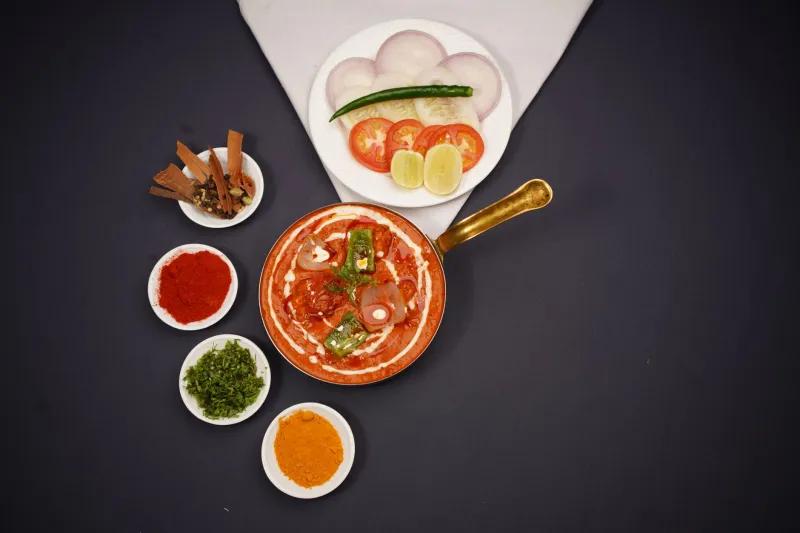
American cities are having a serious moment with Indian food right now. Delivery apps are packed with options, fast-casual spots are popping up in every major metro, and "Indian-inspired" is showing up on menus everywhere from airport food courts to upscale gastropubs. That's mostly great news — except for one catch.
Not all of it is actually Indian food.
Some of it is a carefully calibrated approximation, engineered to hit familiar flavor notes without challenging a mainstream American palate. The spice levels are dialed back, the regional nuance is smoothed over, and the result is something that's technically inspired by the subcontinent but tastes more like a vague, warm hug than an actual dish with a history and a hometown.
If you're ordering Indian delivery or walking into a fast-casual spot, here's how to tell whether you're getting the real thing — and why it actually matters.
The Spice Question (It's Not About Heat)
Let's clear something up immediately: authentic Indian food is not defined by how much it makes you sweat. The spice complexity in genuine Indian cooking is about layering, not punishment. A well-made dish should have depth — warm notes from cumin and coriander, earthiness from turmeric, brightness from fresh ginger, and maybe a floral lift from cardamom or curry leaves — all working together in sequence.
When a menu describes every dish as "mild, medium, or hot" with no further context, that's often a sign that spice is being treated as a heat dial rather than a flavor architecture. Authentic Indian cooking doesn't typically work that way. A dal makhani has a specific flavor profile regardless of how much chili you add. A saag paneer has textural and aromatic qualities that define it before heat ever enters the conversation.
If the only spice conversation a restaurant is having with you is about Scoville units, proceed with mild skepticism.
Look for the Tadka
This is one of the clearest indicators of a kitchen that knows what it's doing. Tadka (also called tarka or chaunk) is the technique of blooming whole or ground spices in hot fat — usually ghee or oil — and pouring that fragrant, sizzling mixture over a finished dish. It's the final flourish that elevates a simple dal from good to genuinely memorable.
When you order dal at a restaurant and it arrives with a small pool of rust-red, cumin-specked ghee glistening on the surface, that's tadka. When it arrives looking uniform and flat, like soup that was stirred and poured, someone skipped a step.
A similar principle applies to dishes like biryani, where the layering of par-cooked rice and meat (or vegetables) followed by a slow dum (sealed steam) cook is what creates the characteristic fragrance and distinct texture. Biryani that looks and tastes like spiced fried rice almost certainly wasn't made this way.
Regional Identity Is a Green Flag
India is not a monolith. The food from Kerala looks and tastes almost nothing like the food from Punjab, which is entirely different from what you'd eat in Bengal or Hyderabad. Authentic Indian restaurants — especially newer, chef-driven fast-casual concepts — tend to name their regional influences rather than presenting a generic pan-Indian menu.
Look for specific callouts: Chettinad spice blends from Tamil Nadu. Goan coconut-based curries. Lucknowi dum biryani. Rajasthani dal baati. When a menu acknowledges regional specificity, it signals that the kitchen has actual culinary intent behind the food, not just a list of dishes designed to check familiar boxes.
Conversely, a menu that offers butter chicken, tikka masala, and saag paneer as its entire universe — with no indication of where anything comes from or why — is often catering to the broadest possible expectation of "Indian food" rather than celebrating any particular tradition.
Ingredient Sourcing Tells You a Lot
Certain ingredients are genuinely difficult to fake. Hing (asafoetida), kala namak (black salt), amchur (dried mango powder), methi (fenugreek leaves) — these are flavor agents that don't have obvious Western substitutes and aren't typically stocked in a kitchen that's just approximating Indian food for a general audience.
When a menu or restaurant description mentions specific regional ingredients — curry leaves sourced fresh rather than dried, stone-ground spice blends, imported tamarind paste — that's a meaningful signal. You can also check: does the bread menu include more than naan? A kitchen that offers paratha, puri, kulcha, or roti with any specificity about preparation is showing its range. Naan-only is the minimum viable product of Indian bread.
Ghee is another quick test. Real Indian cooking uses ghee for a reason — it has a higher smoke point than butter, a distinct nutty flavor, and is central to the taste of dozens of dishes. If a restaurant has replaced it entirely with generic vegetable oil to cut costs (or cater to dietary fears), the food will taste noticeably flatter.
The Texture and Color Test
Authentic Indian food has visual personality. A proper makhani sauce is a deep, complex orange-red — not the Day-Glo orange of a food-coloring-forward imitation. A dal should have body and some textural variation from the lentils, not a smooth, featureless puree. Paneer should have a slight chew and hold its shape in a curry; if it's dissolving into the sauce, it was probably made with inferior milk or cut corners in the setting process.
Fresh herbs matter too. Cilantro, green chili, and a squeeze of lime added at the end of preparation are hallmarks of a kitchen that understands finishing. If everything arrives uniformly sauced with no fresh element on top, you're probably eating food that was made well in advance and held without much care.
Why This Actually Matters Beyond Taste
Here's the thing: the difference between authentic Indian cooking and its watered-down cousins isn't just about flavor snobbishness. Many of the health benefits associated with Indian food — anti-inflammatory properties of turmeric, digestive support from cumin and fennel, antioxidant activity from fresh spices — are tied directly to the presence and quality of those ingredients. A tikka masala made with pre-mixed powder and a cream-heavy base doesn't carry the same nutritional profile as a dish built on freshly bloomed spices and whole ingredients.
At Taaze Express, we're committed to the real thing — because the real thing is better, more interesting, and genuinely good for you. When you're navigating the crowded Indian food landscape, use this framework as your guide. Your lunch break deserves more than a beige approximation.